Five Common Meal-Planning Mistakes That Leave Nutrients Off the Plate
I plan dinners a week at a time, and for years the only number I looked at was calories. Then I started scoring whole plans against daily nutrient targets, and found that dinner was the smaller part of the story.
To show what I mean, I wrote down a week most people would call normal. Seven dinners: spaghetti and meatballs, chicken stir-fry, beef tacos, macaroni and cheese, cheeseburgers, chicken alfredo and meatloaf. Around them, the meals nobody plans: cereal or toast with orange juice, ham and cheese sandwiches, grilled cheese with tomato soup, a frozen pizza on Saturday, and cookies, chips or fruit in between. I put all of it in a meal plan for four people and scored it.
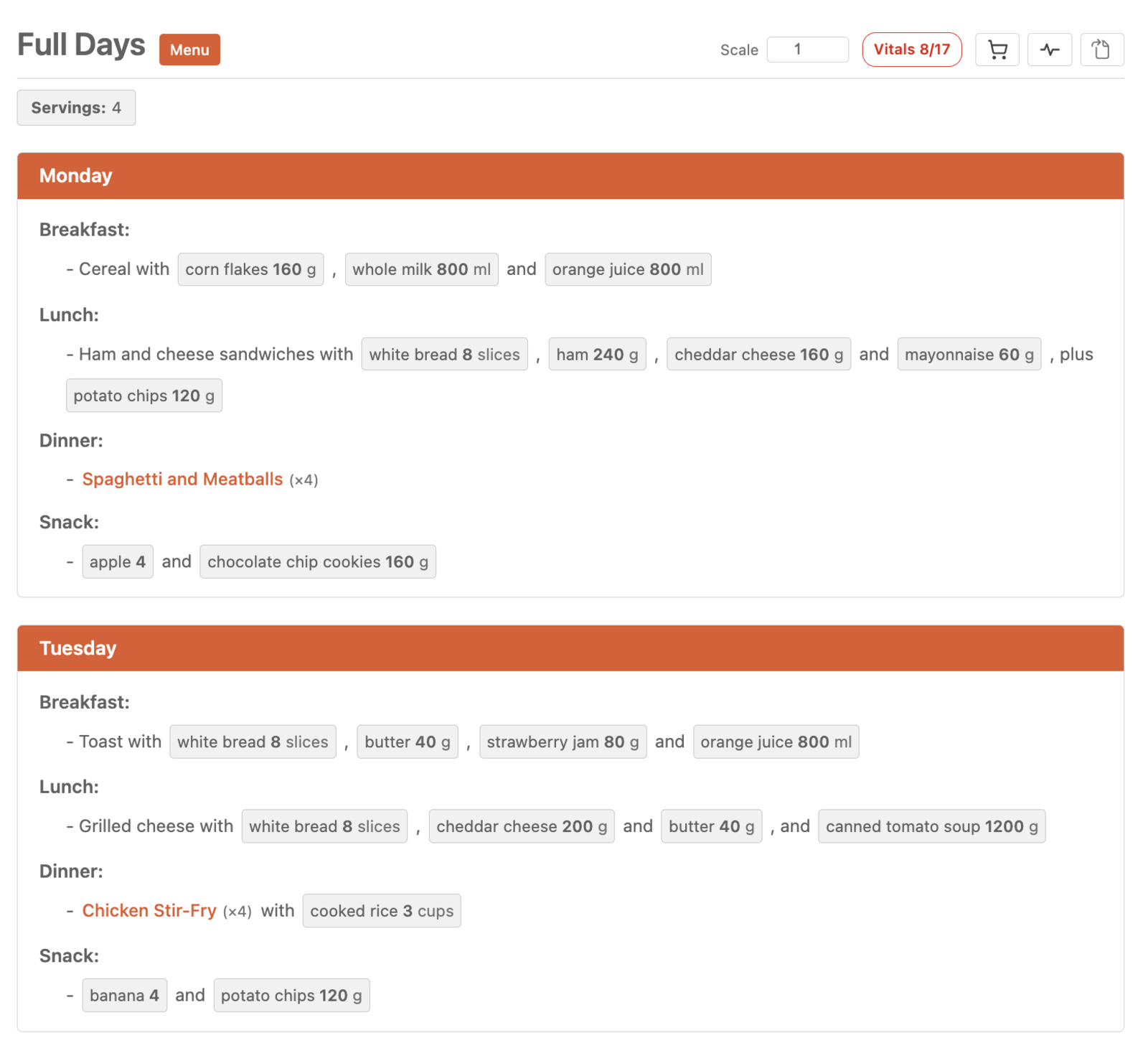
Here is what one person gets from that week, as a share of what they need.
| Share of the week's target | |
|---|---|
| Calories | 99% |
| Saturated fat (a limit) | 186% |
| Sodium (a limit) | 141% |
| Fibre | 44% |
| Potassium | 50% |
| Calcium | 67% |
| Vitamin D | 20% |
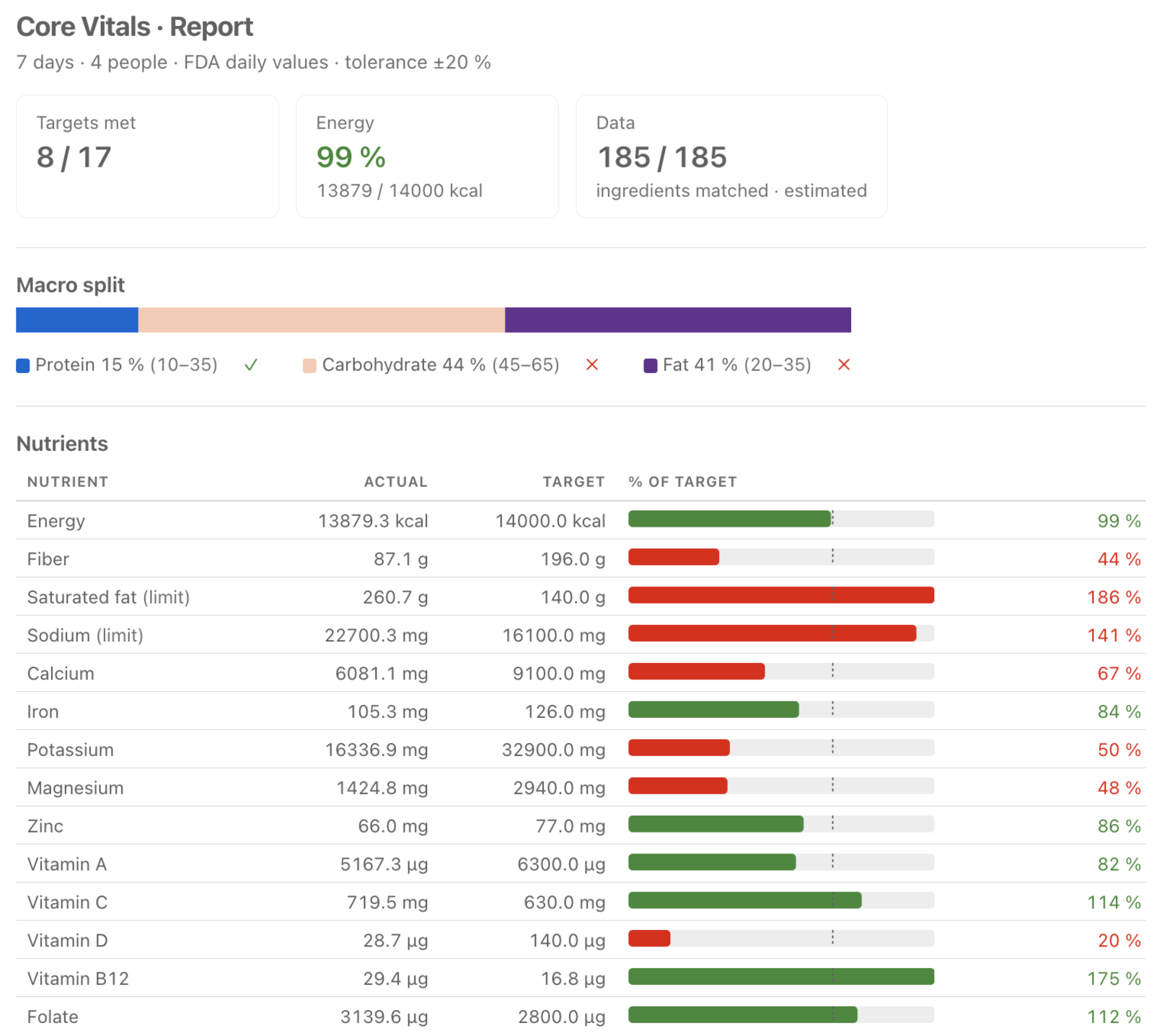
The week met 8 of 17 targets. Five habits explain the other nine.
1. Planning only dinner
This is the one I got wrong for longest. Nutrient targets are daily, and dinner is about a third of the day. I scored the seven dinners on their own to see how much of the picture they hold.
| Dinners alone | Whole week | |
|---|---|---|
| Calories | 36% | 99% |
| Saturated fat (a limit) | 82% | 186% |
| Sodium (a limit) | 64% | 141% |
| Fibre | 13% | 44% |
| Calcium | 22% | 67% |
| Vitamin D | 4% | 20% |
A dinner plan cannot tell you whether you are covered. On their own, those dinners met 3 of 17 targets, and all that says is that two thirds of the food is missing from the plan.
The missing meals are not neutral either. Breakfasts, lunches and snacks used more of the saturated fat limit than the dinners did (104% against 82%), and they brought more than half of the sodium. They also brought most of the calcium and most of the vitamin C. I could have tuned those seven dinners for a year without finding any of that.
If the aim is to cover your vitamins and minerals, the plan has to hold everything you eat that week. The other four mistakes only show up once it does.
2. Counting only calories
By calories this is a near-perfect week: 99% of the target. Fibre was at 44%, potassium at 50%, calcium at 67% and vitamin D at 20%.
These are the common ones. The scientific review behind the US Dietary Guidelines names exactly these four, vitamin D, calcium, dietary fibre and potassium, as the nutrients people eat too little of (summary by the guidelines' authors). A calorie count will never show you any of them.
3. Forgetting the limits
Some targets are ceilings. The week ran to 186% of the saturated fat limit and 141% of the sodium limit, and fat made up 41% of the calories against a recommended 20 to 35%.
No single meal looks alarming. It is butter on the toast, cheese in the sandwich, cookies in the afternoon and cheese again at dinner.
4. Repeating the same few meals
Most households eat from a short list. In this week, cereal appears on three mornings and toast on two. Two kinds of sandwich cover four lunches. Four of the seven dinners are built on ground beef, and five carry cheese or cream.
Each meal is reasonable on its own day. Add them up and the same things are missing every day, so a shortfall that would not matter once becomes the normal state. Checking one recipe at a time cannot see that, because no single recipe is the problem.
5. Checking after you shop
Once the groceries are in the house, the plan is fixed. Before that, a swap costs nothing. I kept the shape of the week and changed what was cheap to change:
- Breakfast: oatmeal with a banana, or whole wheat toast with peanut butter, and a glass of milk. Pancakes stayed on Sunday.
- Lunch: whole wheat bread, turkey or tuna in place of ham and cheese, carrots or fruit in place of chips. Bean quesadillas replaced the frozen pizza.
- Snacks: fruit with almonds or yogurt in place of cookies and chips.
- Dinner: macaroni and cheese became a vegetable chili, and chicken alfredo became salmon with potatoes and green beans on a sheet pan. The other five got a side: a spinach salad, brown rice, black beans and avocado, sweet potatoes, peas.
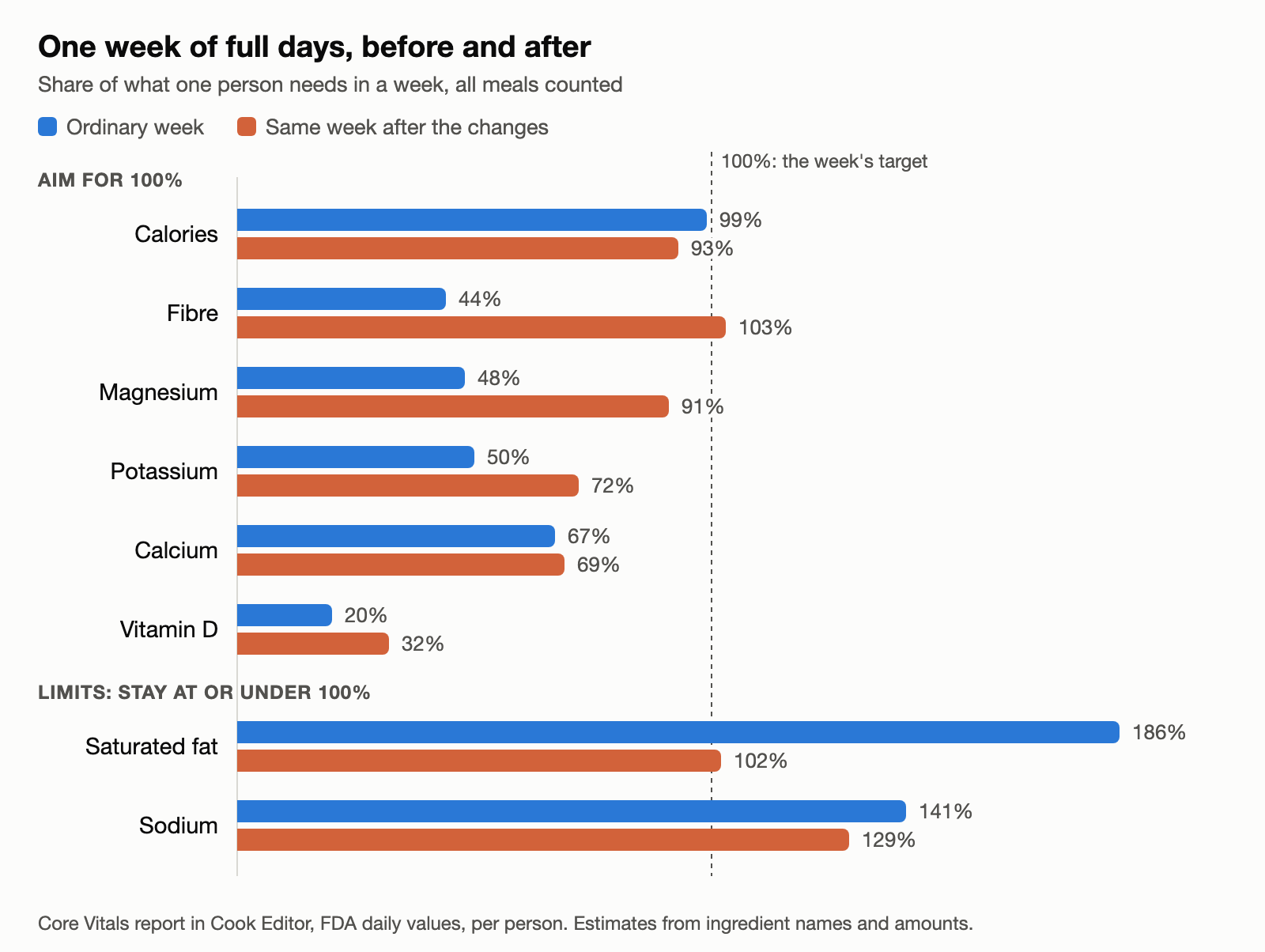
| Before | After | |
|---|---|---|
| Targets met | 8 of 17 | 13 of 17 |
| Calories | 99% | 93% |
| Fibre | 44% | 103% |
| Magnesium | 48% | 91% |
| Potassium | 50% | 72% |
| Calcium | 67% | 69% |
| Vitamin D | 20% | 32% |
| Saturated fat (a limit) | 186% | 102% |
| Sodium (a limit) | 141% | 129% |
Fibre more than doubled, and saturated fat came down to the limit. It is not a perfect week. Sodium is still over, calcium barely moved, potassium is short, and vitamin D is at a third of the target even with salmon on Saturday and milk on five mornings. The check showed me the next problem, which is all I want from it before shopping.
How I checked it
The scoring is done by Core Vitals, a plugin for Cook Editor, the free desktop app I build for plain-text recipes. It adds up every ingredient in a meal plan and compares the total with 17 daily targets: energy, the macro split, fibre, sodium, saturated fat, five minerals and five vitamins. It compares a plan with whole days, which is why the plan needs every meal in it.
Four honest limits:
- The targets are generic adult daily values, not medical advice. All four people are scored against the same adult target, so a household with children would read differently.
- The totals are estimates from ingredient names and amounts. Every ingredient in both plans was matched to the nutrition database (185 in the first, 198 in the second).
- The breakfasts, lunches and snacks are my example of an ordinary week, not a survey of what people eat.
- One day was checked by hand against USDA figures. That check found a few ingredients matched to the wrong food, cheese with no calcium among them. Those are fixed, and every number here is from after the fix.
The editor and the plugin are free. The nutrition data behind the numbers is part of Cook Basic, which new accounts can try free for 7 days (pricing).